

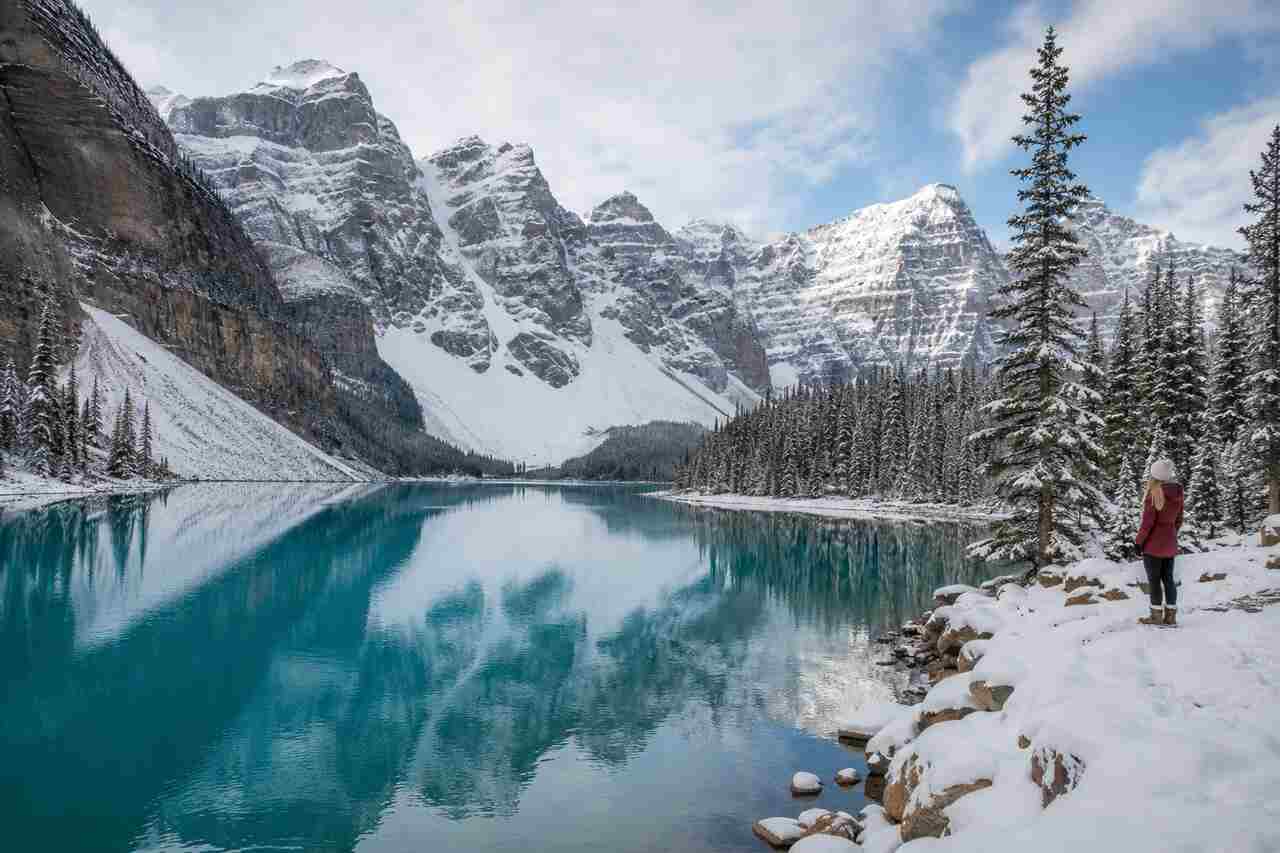
Banff in winter is a magical experience, with snow-covered mountains, frozen lakes, icy waterfalls, ski resorts and relaxing hot springs. But winter also brings freezing temperatures, shorter daylight hours, changing road conditions and additional safety considerations.
Is Banff Worth Visiting in Winter?
Yes, Banff is absolutely worth visiting in winter if you enjoy mountain scenery, snow and outdoor experiences.
Winter transforms Banff National Park into a very different destination. Instead of focusing primarily on hiking and sightseeing around turquoise alpine lakes, visitors can enjoy skiing, snowboarding, snowshoeing, winter walking, skating, ice experiences and other cold-weather activities.
Banff & Lake Louise Tourism identifies November through March as the core winter season and highlights skiing, skating, dog sledding, winter hiking, hot springs and other seasonal experiences.
However, Banff winter is not simply summer with snow added to the scenery. Some trails have avalanche hazards, natural ice requires caution, and winter driving can be considerably more demanding.
For travelers who prepare properly, that combination of dramatic scenery and genuine winter adventure is exactly what makes the destination special.
What Makes Banff Special in Winter?
The biggest attraction is the landscape.
The Canadian Rockies look particularly dramatic when snow covers the surrounding peaks and forests. Frozen waterfalls and lakes add another visual dimension, while the cold weather creates opportunities for activities that are impossible or very different during summer.
Winter also gives travelers a chance to experience Banff at a slower pace. After spending time outside, you can return to town for a warm meal, coffee, spa treatment or a relaxing evening.
Is Banff Good for Non-Skiers?
Yes.
Skiing is one of Banff’s biggest winter attractions, but it is far from the only reason to visit. Non-skiers can build an entire trip around sightseeing, Lake Louise, winter walking, snowshoeing, Johnston Canyon, the Banff Gondola, hot springs, skating when conditions are suitable, guided experiences and time in Banff town.
This makes Banff particularly appealing for couples, families and groups in which only some people ski.
When Is the Best Time to Visit Banff in Winter?
The best time to visit Banff in winter depends on what you want to do.
Banff & Lake Louise Tourism currently describes winter as November through March, with average temperatures varying approximately from 3°C to -14°C depending on the month and elevation.
Parks Canada gives a more useful reminder for travelers: January is generally the coldest month in Banff, with average lows around -15°C in the town, although temperatures can fall into the -30s.
Banff in November
November is an early-winter month.
Snow conditions can vary, and the landscape may be in transition rather than looking like a guaranteed deep-winter postcard. For travelers who want a quieter mountain getaway and early-season winter experiences, it can still be appealing.
If skiing is your primary reason for visiting, check the current operating schedules and mountain conditions rather than assuming every winter activity will already be operating at full capacity.
Best for: Early winter atmosphere, flexible travelers and those interested in the beginning of the ski season.
Banff in December
December brings a stronger winter atmosphere and festive energy.
Snowy scenery, winter activities and seasonal events make this an attractive month for couples and families looking for a holiday-style mountain escape.
The main consideration is that December can involve very cold weather and increased demand around the holiday period, so accommodation and activities should be planned ahead.
Best for: Christmas trips, festive experiences, couples and family vacations.
Banff in January
January is one of the coldest periods of the year and is a strong choice for travelers who genuinely want a deep-winter experience.
Parks Canada identifies January as the coldest month in Banff, with average lows around -15°C and the possibility of much colder conditions.
This is an excellent month for visitors who are prepared for serious cold and want to focus on skiing, snowboarding and other winter activities.
Best for: Skiers, snowboarders and travelers seeking a true winter experience.
Banff in February
February offers classic winter conditions while remaining firmly within the heart of the season.
It can be a good choice for travelers who want skiing, winter sightseeing, snowshoeing, skating or a general Canadian Rockies winter vacation.
As always, actual snow and weather conditions vary, so check current forecasts and trail reports before planning specific outdoor activities.
Best for: A balanced winter vacation, skiing, families and couples.
Banff in March
March brings longer daylight compared with the darkest part of winter, which can make outdoor sightseeing more comfortable.
It is still winter in the mountains, but conditions can become more variable as the season progresses.
For skiers, March can be attractive because the ski season continues while daylight increases. For non-skiers, the extra daylight can make it easier to fit sightseeing and outdoor activities into one day.
Best for: Skiing, winter sightseeing and travelers who want more daylight.
What Is Banff Winter Weather Really Like?
Banff winter weather can be cold, dry and highly variable.
The official Parks Canada weather guidance states that January is the coldest month, with average lows of about -15°C in Banff, while temperatures can occasionally fall into the minus thirties. It also warns visitors about wind chill, which can make the actual temperature feel substantially colder.
Daylight is another factor that travelers sometimes underestimate.
Parks Canada notes that Banff can have as little as approximately eight hours of daylight in December.
That means your itinerary should not simply copy a summer schedule.
How Cold Does Banff Get in Winter?
There is no single winter temperature.
Conditions vary according to the month, elevation, wind and weather system. Banff & Lake Louise Tourism currently lists approximate winter temperatures between 3°C and -14°C depending on the month and elevation, while Parks Canada notes that January lows average around -15°C in the town and can occasionally become much colder.
The practical takeaway is simple: prepare for temperatures significantly below freezing.
Does It Snow in Banff?
Yes.
Snow is a normal part of winter in Banff National Park, although the amount and timing vary across the park.
Parks Canada explains that snowfall differs between areas of the park and that the mountains along the Continental Divide receive substantial winter snowfall. Lake Louise, for example, generally receives more December snow than the town of Banff.
Best Things to Do in Banff in Winter
Banff winter activities range from high-energy skiing to relaxed sightseeing.
The best itinerary depends on your interests, fitness level, weather and whether you are traveling with children.
Go Skiing or Snowboarding
Skiing and snowboarding are among the signature winter experiences around Banff.
The destination provides access to three major ski areas: Banff Sunshine, Lake Louise Ski Resort and Mt. Norquay.
For dedicated skiers, this makes it possible to build a multi-day trip around different mountains instead of spending the entire vacation at one resort.
If you are a beginner, however, don’t choose a ski area based only on reputation. Consider lessons, terrain, transportation, rental logistics and how much time you actually want to spend on the slopes.
Visit Lake Louise
Lake Louise is one of the most recognizable destinations in Banff National Park, and it remains accessible during winter.
Parks Canada confirms that both the Lake Louise community and Lake Louise Lakeshore are open year-round.
In winter, the landscape changes dramatically as snow and ice surround the lake and the mountains.
Visitors can enjoy the lakeshore, winter scenery and seasonal activities, subject to current conditions.
Can You Skate on Lake Louise in Winter?
Skating on Lake Louise can be possible when natural ice conditions are suitable, but it should never be treated like a maintained indoor or artificial rink.
Parks Canada states that it does not monitor natural ice surfaces for safety and warns that ice thickness can vary because of environmental conditions. It recommends at least 15 cm of ice for walking or skating alone and 20 cm for skating parties or games.
Always check current local conditions before stepping onto natural ice.
Explore Johnston Canyon
Johnston Canyon is particularly atmospheric in winter.
Frozen waterfalls and icy formations turn the canyon into one of the region’s memorable cold-weather sightseeing experiences.
However, winter trail conditions can include ice and snow, so proper footwear and traction are important.
Parks Canada recommends ice cleats for winter walking where trails become icy.
Ride the Banff Gondola
The Banff Gondola is a useful choice for travelers who want expansive mountain views without committing to a strenuous winter hike.
It can work particularly well for:
- First-time visitors
- Families
- Couples
- Non-skiers
- Travelers with limited time
A gondola experience can also be paired with other Banff activities on the same day, making it useful for a short itinerary.
Relax at Banff Upper Hot Springs
A hot spring is almost the perfect activity after a cold day in the mountains.
Banff Upper Hot Springs provides visitors with the opportunity to warm up while surrounded by the Canadian Rockies.
It is particularly appealing for travelers who want to balance outdoor adventure with relaxation.
Go Snowshoeing
Snowshoeing is an excellent way to explore snowy landscapes without requiring downhill skiing skills.
Parks Canada maintains designated winter walking and snowshoeing information for both the Banff and Lake Louise areas.
The important point is that not every summer trail is automatically suitable for winter.
Before leaving, check the current trail report, warnings and closures and choose a route appropriate for everyone in your group.
Try Cross-Country Skiing
Cross-country skiing provides a quieter alternative to downhill skiing.
Instead of focusing on lifts and steep terrain, you move through snowy landscapes under your own power.
Parks Canada provides designated information about cross-country skiing around Banff and Lake Louise and notes seasonal restrictions on some track-set trails.
This can be a particularly rewarding choice if your idea of a winter vacation is more about scenery and exercise than resort skiing.
Experience Dog Sledding
Dog sledding is one of the more distinctive winter experiences available around the Banff and Lake Louise region.
It combines snowy scenery with a guided outdoor experience and can be especially appealing to visitors looking for something beyond skiing.
Because tours, routes and operating schedules vary, check current availability and conditions before booking.
Take a Winter Sleigh Ride
A sleigh ride provides a slower and more traditional way to experience the snowy landscape.
It can work well for families and couples who want an outdoor experience without a demanding physical activity.
Weather conditions and operating dates can vary, so confirm details before making it part of a fixed itinerary.
Explore Banff Avenue
Don’t underestimate the value of simply spending time in Banff town.
Banff Avenue gives visitors access to restaurants, cafés, shops and other services, making it an easy place to warm up between outdoor activities.
For many travelers, the combination of mountain scenery outside and a comfortable town atmosphere inside is an important part of the Banff winter experience.
Best Things to Do in Banff in Winter for Non-Skiers
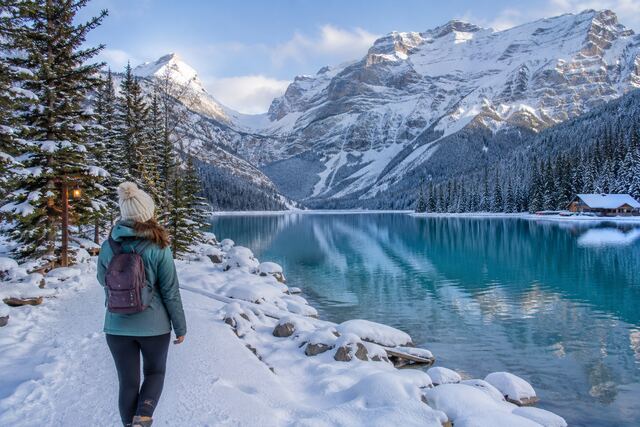
You can have a full Banff winter vacation without skiing.
A strong non-skiing itinerary could combine:
- Lake Louise sightseeing
- Johnston Canyon
- Banff Gondola
- winter walking
- snowshoeing
- hot springs
- dog sledding
- sleigh rides
- cafés and restaurants
- scenic drives when conditions are suitable
The key is to avoid thinking that every day needs to be packed with major attractions.
Winter travel works better when you alternate outdoor experiences with warm indoor breaks.
A Good Non-Skiing Winter Day
Morning: Visit Lake Louise.
Late morning: Enjoy the lakeshore and suitable winter activities.
Afternoon: Return toward Banff and spend time in town.
Evening: Relax at the hot springs or enjoy dinner.
This gives you an active day without turning the entire schedule into a race against the cold.
Banff Winter With Kids
Banff can be a wonderful winter destination for families, but children require a little more planning than experienced winter travelers.
The main challenge isn’t finding things to do. It is balancing outdoor activities with warmth, food, rest and changing weather.
Family-friendly possibilities include:
- skating when conditions are safe
- snow activities
- easy winter walks
- sightseeing
- gondola rides
- snowshoeing on suitable routes
- sleigh rides
- hot chocolate stops
- indoor breaks
- relaxed time at the hotel
How to Plan Winter Days With Children
Avoid scheduling several long outdoor activities back-to-back.
Instead, plan one major outdoor experience, then allow time for food and warmth.
For example, a morning at Lake Louise can be followed by lunch and an indoor afternoon rather than immediately moving to another demanding activity.
This is especially important when temperatures are very low.
How Many Days Do You Need in Banff in Winter?
For most first-time visitors, three to five days is a useful range.
Two Days in Banff
Two days can work for a short trip.
You can focus on Banff town, one major mountain experience and Lake Louise.
However, the schedule will need to remain flexible because winter weather can interfere with outdoor plans.
Three Days in Banff
Three days provides a better introduction.
You could structure the trip around:
Day 1: Banff town, Banff Gondola and hot springs.
Day 2: Lake Louise and a suitable winter activity.
Day 3: Skiing, snowshoeing, Johnston Canyon or another guided experience.
Four to Five Days in Banff
Four or five days gives you considerably more flexibility.
You can dedicate an entire day to skiing, add a guided winter experience and still leave room for poor weather or simply relaxing.
This is often a better option for families and travelers who don’t want to rush.
A Practical 3-Day Banff Winter Itinerary
Day 1: Explore Banff
Start with Banff Avenue and get familiar with the town.
After lunch, head to the Banff Gondola if conditions and operating schedules allow.
Finish the day with a relaxing experience such as the hot springs or a comfortable dinner.
Day 2: Lake Louise
Make Lake Louise the focus of the second day.
Enjoy the winter scenery around the lakeshore and participate in appropriate seasonal activities if conditions allow.
Do not automatically follow summer hiking routes.
Parks Canada specifically warns that the Lake Agnes and Plain of Six Glaciers trails enter avalanche terrain during winter and are not safe for ordinary winter travel without appropriate avalanche training and equipment.
Day 3: Choose Your Winter Experience
Choose based on your travel style.
Skiers: Spend the day at a ski resort.
Non-skiers: Choose snowshoeing, Johnston Canyon, dog sledding or another suitable guided activity.
Families: Choose a shorter outdoor experience and keep the afternoon flexible.
Couples: Combine an outdoor activity with a relaxing meal, spa experience or hot springs.
Getting Around Banff in Winter
Getting around Banff during winter requires more planning than simply following a summer road-trip itinerary.
If you stay in Banff town, many everyday needs can be handled without a car. Public transportation, ski shuttles and guided tours can also reduce the amount of winter driving you need to do.
If you rent a car, however, you gain flexibility for destinations outside town.
Is Banff Easy to Explore Without a Car?
Yes, particularly if you stay centrally and plan around available transportation.
A car-free trip works best when your itinerary focuses on Banff town, organized tours, ski transportation and destinations with suitable public transportation.
For more remote sightseeing, having access to a vehicle or organized transportation may be more convenient.
Is Driving in Banff Safe in Winter?
Winter driving is possible, but conditions can change quickly.
Parks Canada recommends winterizing vehicles between November and March and notes that snow tires are mandatory on some roads. It also directs travelers to Alberta 511 for current road reports.
Before setting out, check:
- Weather forecasts
- Road conditions
- Current closures
- Tire requirements
- Visibility
- Daylight
- Parking conditions
Never assume that because the road is clear in Banff town, conditions will be identical farther into the mountains.
Banff Winter Road Closures and Restrictions
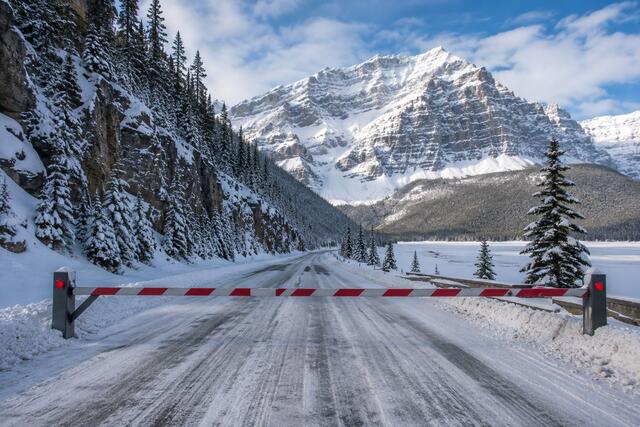
One of the biggest planning mistakes is copying a summer itinerary and assuming the same destinations will be accessible in winter.
Seasonal closures and restrictions can significantly change how you move around the park.
For example, Parks Canada states that Moraine Lake Road is closed to personal vehicles year-round. In winter, the road is track-set for skiing and Moraine Lake itself is inaccessible because of avalanche hazard.
Parks Canada also lists seasonal restrictions affecting areas and trails throughout the park.
Always check current closures before traveling.
Banff Winter Safety: What You Need to Know
Winter in Banff is beautiful, but it is also a real mountain environment.
Parks Canada identifies winter hazards including avalanches, disorientation, thin ice, hypothermia and frostbite.
Avalanche Safety
Avalanche danger is one of the most important issues to understand.
Parks Canada states that avalanche season in the mountains extends from November through June.
At Lake Louise, some popular summer trails—including the Lake Agnes and Plain of Six Glaciers routes—enter avalanche terrain during winter. Parks Canada says these routes are not safe for winter travel unless visitors have the necessary avalanche training and equipment.
That means a trail being popular in summer does not make it suitable for winter.
Never use tracks left by other visitors as proof that a route is safe.
Natural Ice Safety
Frozen lakes can look deceptively solid.
Parks Canada does not monitor natural ice surfaces for safety and explains that thickness can vary because of environmental conditions.
If you plan to skate on natural ice, verify current conditions before going onto the surface.
Wildlife Safety
Wildlife remains part of the Banff experience during winter.
Parks Canada notes that although bears are generally hibernating, they can awaken, while cougars, wolves and other wildlife remain active year-round.
Never approach wildlife.
If you see an animal, give it plenty of space and observe from a safe distance.
Cell Phone Coverage
Do not assume that your phone will work everywhere.
Parks Canada specifically warns that cell coverage is not reliable throughout Banff National Park.
For remote winter activities, consider appropriate emergency communication equipment and tell someone where you are going.
What to Pack for Banff in Winter
The right clothing can make the difference between enjoying Banff and spending the entire day trying to get warm.
Essential Winter Clothing
Pack:
- Warm base layers
- Insulating mid-layers
- A suitable winter outer layer
- Insulated winter boots
- Warm socks
- Gloves or mittens
- Winter hat
- Neck warmer
- Sunglasses
- Sunscreen
What to Pack for Winter Hiking
If you plan to walk or snowshoe beyond easy town sightseeing, add:
- Ice cleats
- Hiking poles
- Water or a thermos
- High-energy food
- First-aid kit
- Emergency blanket
- Headlamp
- Extra warm clothing
- Navigation equipment
- Emergency communication device where appropriate
Parks Canada recommends winter visitors carry items such as water, high-energy food, bear spray, hiking poles, ice cleats, a first-aid kit, emergency supplies, a headlamp and extra warm clothing.
Do You Need Ice Cleats in Banff?
They can be extremely useful.
Parks Canada states that many trails become snow-packed and have slippery sections during winter and recommends ice cleats for winter walking.
Even an easy trail can become significantly more difficult when covered with ice.
Banff Winter vs. Summer: Which Is Better?
Neither season is universally better.
It depends on what you want from the trip.
| Experience | Winter | Summer |
|---|---|---|
| Snow-covered mountains | Excellent | No |
| Skiing and snowboarding | Excellent | No |
| Frozen waterfalls | Excellent | No |
| Ice skating | Seasonal opportunity | No |
| Winter atmosphere | Excellent | No |
| Long hiking days | Limited | Excellent |
| Broad trail accessibility | More limited | Better |
| Warm weather | No | Yes |
| Snow activities | Excellent | No |
| Alpine sightseeing | Excellent | Excellent |
If your dream is skiing, snowshoeing, skating and snowy mountain scenery, winter is the obvious choice.
If you want long hikes, extensive trail access and warmer temperatures, summer is generally easier.
Common Banff Winter Planning Mistakes
Trying to Do Too Much
Cold weather and short daylight make packed itineraries exhausting.
Give yourself time to warm up, eat and adjust plans.
Treating Summer Trails as Winter Trails
This is one of the most serious mistakes.
Some popular summer destinations enter avalanche terrain during winter. Parks Canada specifically warns about routes around Lake Louise, including Lake Agnes and Plain of Six Glaciers.
Assuming a Frozen Lake Is Safe
Never judge ice safety by appearance alone.
Natural ice is affected by many environmental factors, and Parks Canada does not monitor natural ice surfaces for safety.
Wearing Ordinary Sneakers
Snow and ice require appropriate footwear.
Winter boots and suitable traction are much more practical than ordinary sneakers.
Planning Every Day Around Perfect Weather
Mountain weather can change.
Keep at least some flexibility in your schedule.
Thinking You Have to Ski
You don’t.
Banff offers enough winter experiences for a complete vacation without ever putting on skis.
Is Banff Expensive in Winter?
The total cost depends heavily on your accommodation, transportation and activities.
A basic winter trip can include:
- Accommodation
- Transportation
- Food
- Park admission
- Equipment rental
- Ski passes
- Guided tours
- Seasonal attractions
Skiing can significantly increase the cost because you may need lift access, equipment rental, lessons and transportation.
A non-skiing trip can sometimes be simpler because you can concentrate your spending on accommodation, food and a smaller number of paid experiences.
Before booking, check the current Parks Canada fee information because admission fees and other charges can change.
Where Should You Stay for a Banff Winter Trip?
For a first visit, staying in or near Banff town is often convenient.
You have easier access to restaurants, shops, transportation and tour services, while many everyday activities can be handled without extensive driving.
Lake Louise may be preferable if your trip is heavily focused on the Lake Louise area or skiing there.
The best location therefore depends on your itinerary rather than simply choosing the destination with the most famous scenery.
FAQ’s
Yes. Banff is an excellent winter destination for skiing, snowboarding, snowshoeing, winter walks, frozen waterfalls, scenic sightseeing, hot springs and other seasonal experiences.
January is generally the coldest month. Parks Canada lists average January lows around -15°C in the town of Banff, although temperatures can fall much lower.
Yes. December is part of Banff’s winter season, although snowfall varies between locations and from year to year.
Yes. A car-free trip can work particularly well if you stay in Banff town and use public transportation, ski shuttles and organized tours.
Yes, but winter conditions can make the journey more demanding. Check current road and weather conditions before driving.
Yes. The Lake Louise community and lakeshore are open year-round.
Skating can be possible when natural ice conditions are suitable, but you should always check current conditions before going onto the lake. Parks Canada does not monitor natural ice surfaces for safety.
Yes. Its frozen waterfalls and winter scenery make it a popular cold-weather experience. Visitors should check current trail conditions and use suitable footwear and traction.
Yes, but winter hiking requires more planning than summer hiking. Some routes can involve avalanche terrain, and trail conditions can change throughout the day.
Banff can be enjoyed safely when visitors prepare for winter conditions, follow current Parks Canada guidance and stay within their experience level. Important hazards include avalanches, thin ice, extreme cold, changing weather, difficult road conditions and wildlife.
Three days is a good introduction for many first-time visitors. Four to five days provides more flexibility for skiing, guided activities, weather changes and slower sightseeing.
Dress in layers with a warm base layer, insulating mid-layer and suitable outer layer. Add insulated boots, warm socks, gloves, a hat and neck protection. For winter hiking, consider ice cleats, poles and additional emergency equipment.
Final Thoughts on Visiting Banff in Winter
Banff winter rewards travelers who plan for the season rather than simply adapting a summer itinerary.
The snow-covered Canadian Rockies, frozen waterfalls, winter trails, ski resorts, Lake Louise and hot springs create an experience that can be every bit as memorable as a summer visit—and for some travelers, even better.
The most important thing is to understand the difference between winter sightseeing and winter mountain travel.
You can enjoy many beautiful areas without entering technical terrain. At the same time, some apparently simple routes can involve serious avalanche hazards. Parks Canada specifically warns that avalanche season extends from November through June and that certain Lake Louise trails are unsafe without appropriate training and equipment.
For a first visit, a three-to-five-day itinerary is a practical starting point: spend time in Banff, visit Lake Louise, choose one or two winter activities and keep enough flexibility for changing weather.
Most importantly, check current trail conditions, road reports, closures, weather and avalanche information immediately before heading out.
Explore lifestylewifey.com for practical ideas and inspiration across family, home decor, business, lifestyle, and travel.
